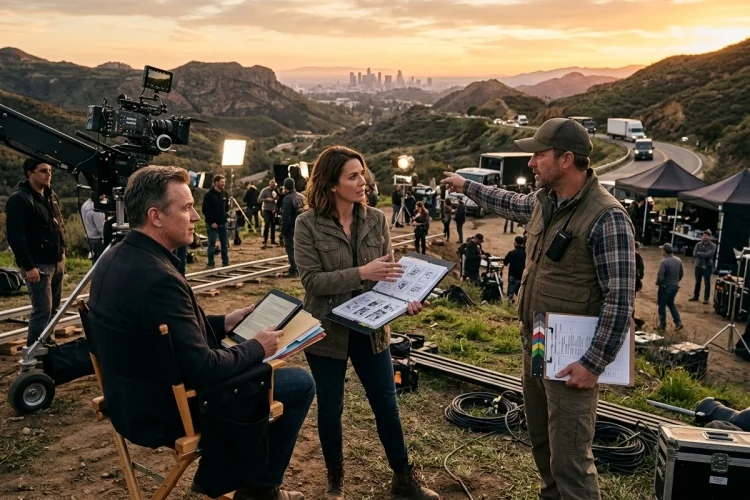
Watch the credits at the end of a movie, and you may see several people described as producers. There might be an executive producer, a producer, a co-producer, and a line producer-all working on the same project.
These titles can be confusing because their responsibilities sometimes overlap. Their exact meanings may also change according to the production’s size, financing structure, country, and whether the project is a feature film, television series, documentary, or commercial.
The Producers Guild of America notes that producer credits can represent different responsibilities across different forms of media. However, there is a useful basic distinction. The executive producer generally operates at the highest financial or strategic level.
The producer guides the project as a whole, balancing creative, commercial, and practical decisions. The line producer manages the budget and daily logistics of physical production.
Understanding executive producer vs producer vs line producer roles makes film credits easier to read and helps new filmmakers build a production team with clear responsibilities.
Why Are There So Many Types of Film Producers?
Producing a film involves far too many responsibilities for one person to manage on a large production.
Someone must develop the screenplay, raise financing, hire the director, create a budget, arrange locations, manage contracts, monitor filming, supervise post-production, and prepare the finished movie for release.
Different producer titles divide this work into manageable areas. Some focus on development and financing, while others deal directly with creative decisions or physical production.
The hierarchy is not always identical. On a theatrical feature, the person credited as “Producer” or “Produced By” is normally the primary producer. On certain television or streaming projects, an executive producer may be the main creative and business leader.
Credits should therefore be understood in the context of the individual project. A title alone does not always reveal how closely someone worked with the cast and crew.
What Does an Executive Producer Do?
An executive producer usually operates at a high strategic level. They may help secure major financing, connect the project with a studio or distributor, acquire rights, attract important talent, or provide the influence needed to move the film forward.
For example, an independent filmmaker may have a strong screenplay but no access to investors. An experienced executive producer could introduce financing partners, advise on the business structure, and help make the production appear more credible.
An executive producer may also represent a production company, studio, broadcaster, or financing organisation. In that situation, they monitor whether the project is meeting its financial, contractual, and creative obligations.
The role does not always involve managing daily filming. An executive producer might receive regular budget reports, review major casting choices, or approve important changes without being present on set every day.
Under the Producers Guild’s feature-film guidelines, a non-primary executive producer should make an essential contribution, such as championing the project during early development, securing a meaningful portion of financing, or helping secure and develop the underlying material.
Financing alone, without managerial or creative duties, does not necessarily satisfy that definition.
The Executive Producer’s Main Question
The executive producer often asks: Can this project move forward successfully at the highest business and strategic level?
They are concerned with financing, ownership, partnerships, risk, market position, and the relationship between the film and the organisations supporting it.
What Does a Producer Do?
The producer is commonly the central driving force behind a feature film. They may become involved when the project is still only an idea and remain responsible until the finished movie is delivered and released.
Producers can discover stories, acquire adaptation rights, hire screenwriters, develop scripts, secure financing, recruit directors, approve major cast members, and decide the production’s scale.
During preparation, the producer works with the director to protect the creative vision while ensuring that it remains financially achievable. If the screenplay requires an expensive crowd scene, the producer might help redesign it without losing its dramatic purpose.
ScreenSkills describes producers as working at the financial, practical, and creative centre of a production. They often identify the original opportunity, secure rights and financing, approve costs, hire staff, solve major problems, and guide the project towards distribution.
The producer may delegate daily budget management to the line producer, but they remain responsible for the overall result. They communicate with financiers, department heads, distributors, and the director throughout the filmmaking process.
The Producer’s Main Question
The producer usually asks: How do we turn this idea into the strongest finished film possible?
They must think about story, talent, money, scheduling, audience, marketing, legal responsibilities, and delivery at the same time.
What Does a Line Producer Do?
The line producer takes the approved creative plan and determines how to execute it using the available money, crew, locations, and shooting time.
The word “line” is often associated with the budget line separating above-the-line creative costs from below-the-line production expenses. In practice, the line producer is responsible for controlling much of the physical production budget.
They prepare or refine budgets, hire crew members, negotiate rates, arrange equipment, review contracts, oversee production spending, and help make sure filming remains safe and on schedule.
The Producers Guild describes the line producer as the person with primary responsibility for the budget and logistics of feature-film production from pre-production through the completion of filming. Below-the-line department heads normally report through this role.
Suppose the director wants to film a night scene on a remote beach. The line producer calculates the cost of transport, accommodation, lighting, security, permits, overtime, catering, and weather protection.
They may then recommend reducing the number of shooting nights, choosing a more accessible location, or building part of the beach environment elsewhere.
The line producer is not simply trying to spend less. Their job is to use the budget intelligently so the most important creative elements can be achieved.
The Line Producer’s Main Question
The line producer asks: How can we complete this production safely, on time, and within the approved budget?
That question shapes decisions about staffing, schedules, equipment, locations, transport, contracts, and contingency plans.
Executive Producer vs Producer vs Line Producer
The clearest difference is the level and type of responsibility each person carries.
An executive producer usually concentrates on high-level financing, business relationships, strategic oversight, or access to essential resources. They may be heavily involved in development but less present during daily production.
The producer manages the entire journey. They connect the screenplay, director, financing, production process, post-production, and eventual release.
The line producer focuses on physical execution. They turn the approved plan into budgets, contracts, schedules, staffing decisions, and practical systems.
A simple way to remember the distinction is this:
The executive producer helps make the project possible. The producer helps make the right film. The line producer helps make that film within real-world limits.
This summary is useful, but it is not an unbreakable rule. On smaller films, one person may perform all three functions. On television productions, executive producers may also act as lead writers, showrunners, or primary creative decision-makers.
How the Three Producers Work Together
Imagine a £3 million independent thriller. An executive producer helps secure part of the financing and introduces the project to a sales company.
The producer develops the screenplay, hires the director, approves the lead cast, and works with the creative team to establish the movie’s overall direction.
The line producer examines the script and creates a detailed budget. They discover that the planned 35-day shoot is too expensive and develop a 28-day schedule using fewer company moves and more efficient location groupings.
The producer and director then review the creative effect of those changes. The executive producer may need to approve a revised financing plan, while the line producer prepares the crew and resources needed to carry it out.
During filming, the line producer closely monitors daily spending and progress. The producer handles major creative or personnel issues, while the executive producer receives updates and becomes involved when a decision affects financing, rights, or delivery.
This collaboration works best when everyone understands their authority. Confusion can arise when an executive producer begins managing minor set details or when a creative producer approves expensive changes without consulting the line producer.
Who Has the Most Authority?
There is no universal answer because authority depends on contracts, financing, company structure, and the type of production.
An executive producer representing the main financier may have approval rights over the budget, casting, or final delivery. A powerful producer who developed the project may control major creative and business decisions.
The line producer usually has significant authority over spending and physical production. However, they typically report to the primary producer rather than deciding the film’s overall creative direction.
ScreenSkills describes line producers as senior production figures who allocate money, hire crews, and ensure filming is completed safely, creatively, on time, and on budget.
Authority can also change during the production. The producer may lead development, while the line producer becomes especially influential during preparation and principal photography.
The most effective team does not compete constantly for control. Each producer uses their expertise to protect a different part of the same project.
Which Producing Role Might Suit You?
Someone interested in financing, partnerships, company strategy, and high-level project development may be attracted to executive producing.
A person who enjoys storytelling, talent relationships, decision-making, pitching, and guiding an entire film may prefer the primary producer role.
Someone who enjoys budgeting, planning, negotiation, logistics, and solving practical problems under pressure may be well suited to line producing.
ScreenSkills places planning, crew hiring, cost control, contracts, scheduling, and physical production at the centre of the line producer’s work.
Beginners can explore all three areas by producing a small short film. Develop the idea, create a basic budget, recruit collaborators, organise the shoot, and guide the project through editing.
That experience will show whether you are most interested in finding resources, shaping the overall project, or managing its practical execution.
The difference between an executive producer, producer, and line producer comes down to focus. Executive producers commonly handle high-level financing, influence, partnerships, and strategic oversight.
Producers drive the entire project from development towards completion, balancing creative and commercial priorities. Line producers control the budget, crew, contracts, schedule, and logistics of physical production.
The titles may overlap, particularly on independent films and television productions, so the specific responsibilities should always be defined clearly.
When planning your own film, decide who has authority over financing, creative choices, and daily spending before production begins. Clear roles reduce conflict, protect the budget, and allow each producer to concentrate on the work that helps the film reach the screen.