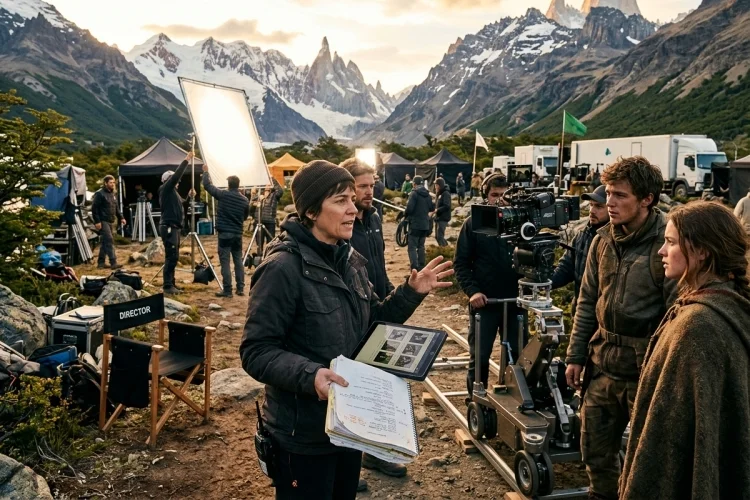
When people imagine a film director, they often picture someone sitting in a chair, shouting “Action!” and watching actors perform. That is certainly part of the job, but it represents only a small section of what directing actually involves.
A director is responsible for shaping the creative vision of a film. They interpret the screenplay, decide how the story should feel, guide the actors, collaborate with department heads, and make hundreds of decisions before, during, and after filming.
ScreenSkills describes the director’s central task as imagining the screenplay in visual form and leading the creative team responsible for bringing that vision to the screen.
So, what does a film director actually do from day to day? The answer changes depending on the size of the project. A director working on a small independent film may handle several jobs, while a studio production may have dozens of specialised departments.
In every case, however, the director helps ensure that the performances, images, sound, design, and editing support one coherent story.
The Director Develops the Creative Vision
The director’s most important responsibility is understanding what the film is really about. This means looking beyond the basic events in the screenplay and identifying its emotional core, themes, tone, and point of view.
For example, a script about two brothers returning to their childhood home could become a gentle family drama, a tense psychological thriller, or a dark comedy.
The words on the page may remain similar, but the director’s interpretation influences how the audience experiences them.
The director creates a shared vision that other departments can understand. They may use reference films, photographs, music, paintings, mood boards, or written notes to communicate the desired atmosphere.
This vision acts as a guide throughout production. When the team must choose between two locations, costumes, camera movements, or performances, the director asks which option best supports the story.
The Director Breaks Down the Script
Long before filming begins, the director studies the screenplay scene by scene. They examine character motivations, emotional changes, story rhythm, visual opportunities, and practical challenges.
The director may discuss revisions with the screenwriter and producer. Some scenes may need to be shortened, clarified, combined, or adjusted to fit the available budget and schedule.
Directors also think about what the audience needs to understand at each moment. They decide where information should be revealed, when tension should increase, and which details deserve visual emphasis.
Under the Directors Guild of America’s creative-rights framework, directors working under the relevant agreement participate in decisions involving elements such as the script, casting, creative personnel, locations, set design, and production schedules.
Creating a Directing Plan
A directing plan does not need to contain instructions for every second of the film. It should identify the most important emotional and visual choices.
For a dinner scene, the director might decide that the conversation should begin politely but gradually feel uncomfortable. The camera could start with balanced group shots before moving closer as the characters’ secrets emerge.
This planning gives the crew direction while leaving room for discoveries during rehearsals and filming.
The Director Collaborates During Pre-Production
Film directing is highly collaborative. During pre-production, the director works closely with producers, casting professionals, the cinematographer, production designer, costume designer, sound team, editor, and other department heads.
Casting is particularly important because an actor’s personality, timing, appearance, and interpretation can transform a character. Directors may watch auditions, organise callbacks, and test whether actors have believable chemistry.
The director also visits potential filming locations. A place may look perfect in photographs but be too noisy, too small, difficult to light, or expensive to access.
Meanwhile, the director and cinematographer discuss framing, lenses, camera movement, lighting, colour, and aspect ratio. ScreenSkills notes that the director of photography works closely with the director to establish the film’s overall look and feel.
The Director Guides the Actors
Directing actors is one of the most visible parts of the job. The director helps performers understand their characters, relationships, objectives, and emotional journeys.
Good direction is usually specific and playable. Telling an actor to “be more interesting” provides little practical help. Asking them to hide their anger while attempting to impress someone gives them a clear action to perform.
Different actors require different approaches. One performer may enjoy discussing a character’s entire history, while another may prefer a simple objective for each scene. The director must communicate in a way that supports the individual actor without creating confusion.
Rehearsals may be used to explore movement, dialogue, timing, and relationships. However, directors also need to protect spontaneity. Repeating a scene too many times before filming can sometimes make a performance feel mechanical.
The goal is not to control every expression. It is to create an environment in which actors can take creative risks while remaining consistent with the wider story.
The Director Leads the Creative Work on Set
During production, the director becomes the central creative decision-maker on set. They watch rehearsals and recorded takes, evaluate performances, approve framing, and decide whether the team has captured what the scene requires.
The director usually works closely with the first assistant director, who helps organise the schedule, coordinate departments, and keep the set moving. This allows the director to concentrate more fully on storytelling and performance.
A shooting day rarely goes exactly as planned. Weather may change, equipment may fail, an actor may struggle with a scene, or a location may become unavailable. The director must solve these problems without losing sight of the film’s purpose.
For instance, imagine that a planned sunset scene cannot be completed before the light disappears. The director might simplify the shot list, change the blocking, move the scene indoors, or reschedule it.
Directing therefore requires both creativity and practicality. A brilliant idea is only useful when it can be completed safely, within the available time and resources.
The Director Shapes Visual Storytelling
A director does not normally operate every camera or position every light personally. Instead, they communicate the emotional and narrative purpose of a scene to the cinematographer and other visual departments.
Camera placement affects how viewers interpret a moment. A wide shot can make a character appear isolated, while a close-up may reveal discomfort or vulnerability. A steady camera can create calm, while unstable movement may suggest panic.
Production design, costume, makeup, props, and colour also communicate information. A character’s cramped bedroom may reveal more about their life than several lines of dialogue.
The director considers how all these visual elements work together. The goal is not simply to make every shot beautiful. It is to make each creative choice meaningful.
Adobe’s cinematography guidance similarly emphasises the collaboration between the director and cinematographer from planning through post-production to maintain a consistent visual style.
The Director Remains Involved in Post-Production
The director’s job does not end when filming wraps. During post-production, they work with the editor to select takes, arrange scenes, refine performances, and control the film’s pacing.
A scene that seemed effective on set may feel slow in the edit. Another may become more powerful when dialogue is removed and the audience is allowed to focus on a character’s reaction.
The director also reviews sound design, music, visual effects, titles, and colour grading. Sound can completely change the meaning of an image, while music can increase emotion or create an unintended mood.
Adobe explains that post-production brings together editing, sound, colour, music, and other recorded elements to form the finished screen experience.
Depending on the production agreement, producers or studios may have authority over the final version. However, directors commonly prepare and present a director’s cut that communicates their preferred creative approach.
The DGA maintains specific creative-rights provisions concerning a director’s participation in editing and post-production.
How Is a Director Different From a Producer?
The director and producer are both leaders, but their responsibilities are different. The director mainly leads the artistic and storytelling side of the project.
The producer manages the wider production process. This can include financing, contracts, schedules, staffing, legal responsibilities, safety, and delivery of the completed film.
ScreenSkills notes that producers carry significant responsibility for managing a production and ensuring that the finished project is delivered.
The two roles must work together. A director may request an elaborate night sequence involving rain and hundreds of extras, while the producer explains what can realistically be achieved within the budget.
This relationship is not supposed to be a battle between art and money. Strong directors understand practical limitations, while strong producers look for realistic ways to protect the creative vision.
What Skills Does a Film Director Need?
Film directors need strong storytelling instincts, visual awareness, communication skills, and emotional intelligence. They must explain ideas clearly to people from many different creative and technical backgrounds.
Leadership is essential, but leadership does not mean behaving aggressively. A director should listen, make decisions, accept responsibility, and keep the team focused when pressure increases.
Directors also need adaptability. They may spend weeks planning a scene only to redesign it within minutes because of weather, time, or technical limitations.
The best way to develop these skills is through practical experience. The BFI recommends watching films closely, finding an individual creative voice, making short projects, and gaining experience around real productions.
A beginner can start with a two-minute scene involving one location and two actors. Plan the emotional objective, create a basic shot list, record several takes, and complete the edit.
Each finished project will reveal something new about performance, coverage, communication, and visual storytelling.
A film director is the creative leader who guides a movie from the screenplay to the finished screen experience.
They interpret the story, collaborate with department heads, cast and direct actors, plan the visual approach, solve problems on set, and help shape the final edit.
Directing is not about controlling every detail alone. It is about giving talented collaborators a clear direction and helping their work become part of one consistent film.
To understand the role properly, start directing something small. Choose a simple scene, decide what the characters want, plan how the camera will tell the story, and work with actors to explore different performances.
Completing even a short film will teach you more about directing than simply imagining yourself sitting in the director’s chair.